AthenaMain

Federal Dominance and the Failure of Nigeria’s Mortgage Market

Nigeria does not lack a mortgage policy; it lacks a functioning mortgage market. Mortgage lending remains negligible—just 0.02–0.07% of GDP—against a housing deficit of 28 million units and a financing gap of N21 trillion. In response to weak capital markets and macroeconomic instability, the federal government assumed a dominant role through the Federal Mortgage Bank of Nigeria (FMBN), the National Housing Fund (NHF), and the Ministry of Finance Incorporated Real Estate Investment Fund (MREIF). While these interventions have expanded access at the margins, they have not produced a scalable system. Five structural constraints persist: shallow long-term funding, macroeconomic instability, administrative inefficiencies, weak land and legal systems, and the exclusion of informal-sector workers. These constraints reinforce one another, limiting demand, discouraging investment, and suppressing market growth. The MREIF pilot illustrates the problem. Despite improved product design, disbursement remains low and uptake modest—reflecting systemic limitations rather than isolated implementation failures. This brief argues for a shift from federal dominance to market enablement, anchored on three priorities: building a credible secondary mortgage market through the Nigerian Mortgage Refinance Company (NMRC), expanding access through NHF digitisation and inclusion, and reforming land and legal systems. Without reform, inefficiency and exclusion will persist; with it, mortgage expansion can drive housing supply, employment, and economic growth.

Protecting the Vulnerable: Why Nigeria Must Reform Laws for Pedestrians and Cyclists

Executive Summary Non-motorised transport (NMT)—walking and cycling—remains essential for millions of Nigerians, particularly low-income households, yet is systematically neglected in law, planning, and investment. Rapid urbanisation and motorisation have prioritised vehicles, exposing pedestrians and cyclists, who account for roughly one-third of road deaths, to disproportionate risk. By mid-2025, more than 3,800 pedestrian casualties were recorded, over half involving children or the elderly. Road crashes and congestion also impose an economic burden equivalent to approximately 5% of GDP annually. Despite national commitments to road safety, climate resilience, and public health, NMT lacks enforceable legal standards, dedicated funding, institutional coordination, and reliable data. Weak enforcement and insufficient infrastructure—scarce pavements, cycle lanes, and safe crossings—force pedestrians and cyclists into direct conflict with motor traffic. Evidence from the Netherlands, Denmark, and Bogotá demonstrates that statutory mandates, safe design standards, speed management, incentives, and behaviour-change initiatives can normalise active mobility and reduce fatalities. To achieve safe, equitable, and sustainable urban mobility, Nigeria must urgently enact legal protections for pedestrians and cyclists, invest in continuous pavements and cycle lanes, enforce traffic regulations, integrate public awareness campaigns, and strengthen institutional capacity. Coordinated, evidence-based reforms will save lives, reduce congestion, lower emissions, and secure inclusive mobility for all citizens.

Substandard and Falsified Medicines in Nigeria: A Crisis of Distribution Governance

Executive Summary Nigeria continues to face significant public-health risks from the circulation of substandard and falsified medicines, despite the existence of established regulatory institutions and comprehensive legal frameworks. The prevailing narrative attributes this crisis to weak enforcement. This policy brief advances a more precise diagnosis: Nigeria’s medicine-quality crisis is primarily a failure of distribution governance rather than a deficit of laws or regulatory bodies. Drawing on the World Health Organization’s typology, the brief distinguishes between falsified medicines (criminal fraud), substandard medicines (manufacturing failure), degraded medicines (storage and transport failure), and unregistered or unlicensed products (regulatory non-compliance). Evidence from regulatory seizures, sentinel sampling studies, inspection reports, and border interceptions indicates that Nigeria’s most persistent vulnerabilities lie in informal wholesale markets, weak cold-chain enforcement, fragmented distribution tiers, and porous import channels—not manufacturing defects alone. Comparative experience from the European Union, Southeast Asia, and selected countries shows that durable progress depends on coordinated enforcement, licensed wholesale distribution, risk-based surveillance, and judicial follow-through, rather than episodic crackdowns. This brief proposes a sequenced reform agenda centred on time-bound closure of open drug markets through phased relocation to Coordinated Wholesale Centres (CWCs); deterrent penalties and swift prosecution; risk-based surveillance and track-and-trace for priority medicines; tighter import controls alongside support for quality-assured local manufacturing; and sustained investment in regulatory capacity and public awareness. Implemented coherently, these measures could realistically reduce the prevalence of substandard and falsified medicines to 5 per cent, restoring public confidence and safeguarding health outcomes.

From Connectivity to Classroom Impact: Integrating Digital Literacy in Nigeria’s Education System

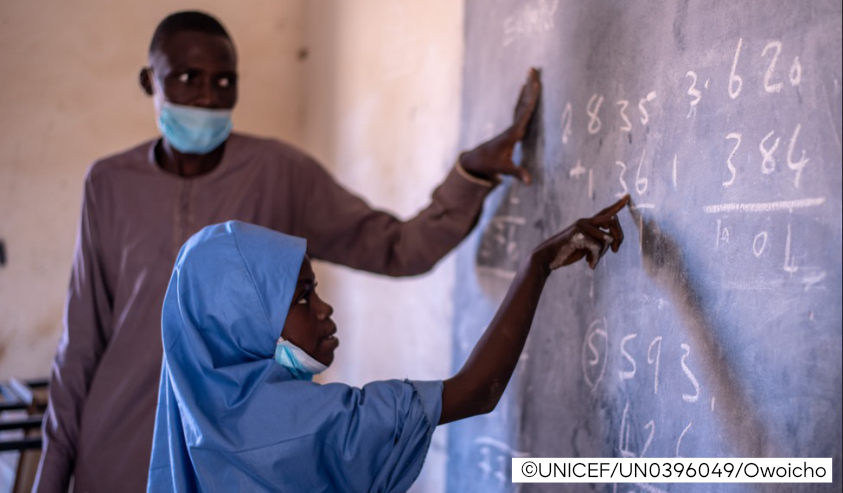
Executive Summary Nigeria’s education system faces a growing digital literacy paradox. National internet usage exceeded 103 million users (45.5% penetration) by early 2024, alongside 164.4 million active internet subscriptions, yet these macro indicators conceal deep school-level, geographic, and pedagogical deficits. Household connectivity has expanded; classroom readiness has not. Nigeria possesses a coherent policy architecture—the National Policy on ICT in Education (NPICE) 2019, National Digital Literacy Framework (NDLF), 2023, and National Digital Learning Policy (NDLP), 2023—but implementation remains fragmented. Teacher capacity deficits, unreliable power and last-mile connectivity, non-ring-fenced financing, and weak monitoring and accountability have limited scale and sustainability. Pilot programmes, including UNICEF-supported initiatives connecting 1,027 schools and training 63,000 teachers, demonstrate feasibility but not national readiness. This policy brief finds that: (1) National connectivity statistics overstate school readiness; (2) Teacher digital competence and certified training capacity remain the single largest bottleneck to classroom integration; (3) Electrification and affordable last-mile broadband are preconditions for sustained use; and (4) Targeted investments combined with strong monitoring and evaluation (M&E) can rapidly increase effective reach. This brief recommends the following: (1) Rapidly scale pre-service and in-service digital pedagogy (targeted national teacher certification programmes); (2) Ring-fence blended federal–state funding for a five-year school connectivity and electrification plan; (3) Harmonise NPICE, NITDA’s Framework and the National Digital Learning Policy into time-bound key performance indicators (KPIs) – schools connected, teachers certified, devices per learner – and (4) Establish a joint FME–NITDA–UBEC public dashboard for real-time M&E. Leveraging available development finance and UNICEF implementation expertise can accelerate scale. If adopted, these measures should measurably raise teacher certification rates, increase the share of basic schools with functional digital access, reduce urban–rural learning gaps, and improve digital-skills outcomes for learners, enabling Nigeria to translate national connectivity gains into durable education transformation. Primary stakeholders for delivery include the Federal Ministry of Education, NITDA, UBEC, State Ministries of Education, REA/energy partners, UNICEF, and multilateral financiers.

Nigeria Cannot Save West Africa—But It Must Secure Itself

Executive Summary: Had the military coup d’état of December 7, 2025, in the Republic of Benin succeeded, it would have posed a fundamental challenge to ECOWAS. More importantly, it would have presented Nigeria with a strategic dilemma cutting to the core of its foreign policy posture and national security priorities. In the end, Nigeria’s response was central to ensuring that the crisis remained contained. The rapid deployment of Nigerian Air Force assets, complemented by the swift mobilisation of ground troops under the ECOWAS Standby Force, allowed the Benin authorities to quickly neutralise the attempted overthrow of the country’s constitutional government. The symbolism of a successful coup in Benin would have been significant. For decades, Benin has been regarded as a rare example of democratic continuity in Francophone West Africa. Its largely peaceful transfers of power, though imperfect, stood in clear contrast to the breakdown of constitutional order in neighbouring Mali, Burkina Faso, and Niger. For Nigeria, Benin represented more than a shared border; it functioned as a democratic buffer, evidence that the region’s drift toward militarised politics was neither inevitable nor irreversible. With a successful coup, that buffer would have disappeared. Nigeria’s western flank and the northern approaches to its key coastal economic zones—from Lagos westward—would be bordered almost entirely by states under military rule. This would expose Nigeria to a belt of political uncertainty and security risk, fundamentally altering its strategic environment and narrowing its room for diplomatic and security manoeuvre.