
World Day of Remembrance for Road Traffic Victims: Nigeria Cannot Endure Another Decade of Road Trauma
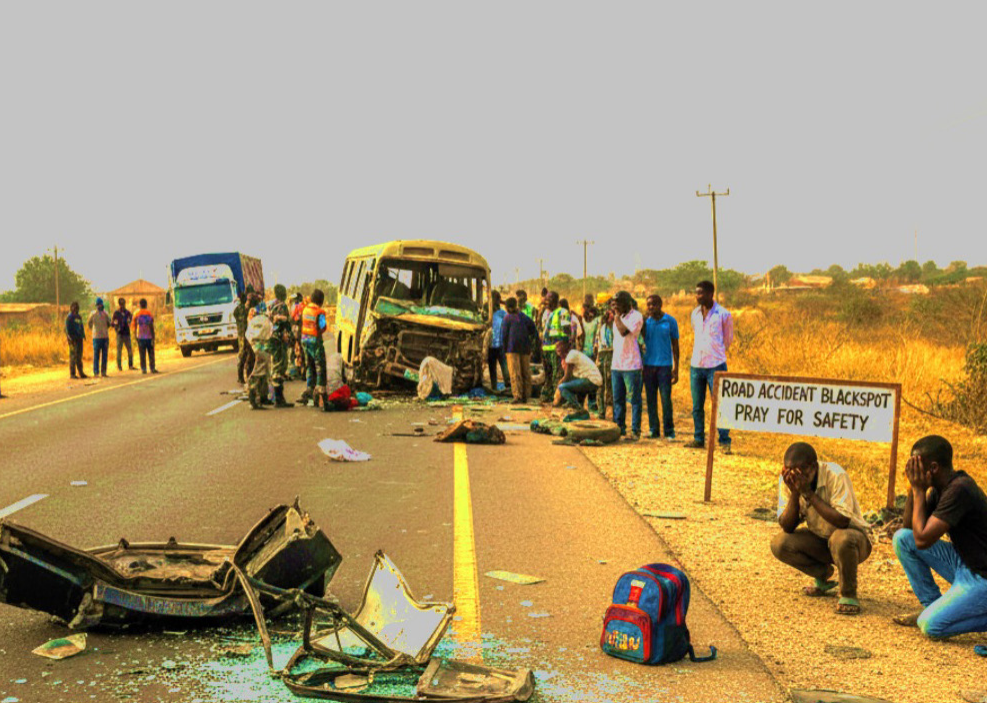
Executive Summary Nigeria’s road-safety crisis continues to impose substantial human and economic costs. In 2024, the Federal Road Safety Corps (FRSC) recorded 5,421 deaths, even as total crashes declined by 10 per cent. This divergence underscores a critical trend: fatality severity is rising, signalling deeper systemic weaknesses rather than fluctuations in traffic volume. The burden is concentrated along a limited set of high-risk corridors and driven largely by commercial fleets, which accounted for 70.6 per cent of crashes in Q2 2025. These patterns point to the need for targeted interventions rather than broad, undifferentiated measures. Reversing this trajectory requires sustained commitment across six reform pillars: (1) dedicated and predictable financing; (2) corridor prioritisation based on risk; (3) strengthened commercial-fleet regulation; (4) reliable emergency medical response; (5) improved data systems; and (6) behaviour-change strategies supported by consistent enforcement. These measures are well-established in global practice; what has been lacking is implementation at scale. Nigeria now has an opportunity to adopt a more coherent, data-driven approach to road safety—one capable of reducing fatalities and improving transport resilience in the long term.