
From Flood Forecasts to Learning Continuity: Strengthening Education Governance in Nigeria

Executive Snapshot Core Diagnosis Nigeria’s failure is not the absence of flood forecasts or school-safety policies. It is the absence of a mandatory activation chain connecting a Nigeria Hydrological Services […]
Beyond Funding: Governance Fragmentation and Institutional Performance in Nigeria’s Public University System

Executive Snapshot Core Diagnosis Nigeria’s public university crisis is fundamentally a problem of fragmented governance, not funding scarcity alone. Authority is dispersed across the Federal Ministry of Education, NUC, governing […]
Continuity Without Confidence: Twenty-Seven Years of Civilian Rule and Nigeria’s Democratic Performance Gap

Core Diagnosis Nigeria’s democratic challenge is no longer one of regime survival but of inter-electoral performance. Since the return to civilian rule in 1999, the country has recorded twenty-seven consecutive […]
Beyond Transparency: Building Results Accountability in Nigeria’s Public Finance System

Executive Snapshot Core Diagnosis Nigeria suffers from a results gap, a persistent disconnect between rising public expenditure and actual improvements in citizen welfare. The problem is institutional rather than fiscal. […]
The Legitimacy Paradox: Why Electoral Modernisation Has Not Restored Democratic Confidence

Executive Snapshot Core Diagnosis Nigeria’s electoral crisis is no longer primarily procedural but institutional. The country’s democratic challenge has shifted from fraud detection to legitimacy management: technology has made irregularities […]
When Health Facilities Become Soft Targets: Sub-National Protection Gaps for Primary Health Centres in Northwest Nigeria

Nigeria is no longer confronting isolated attacks on health facilities in its northwest. It is confronting the steady normalisation of Primary Health Centres (PHCs) as undefended public assets, visible, predictable, […]
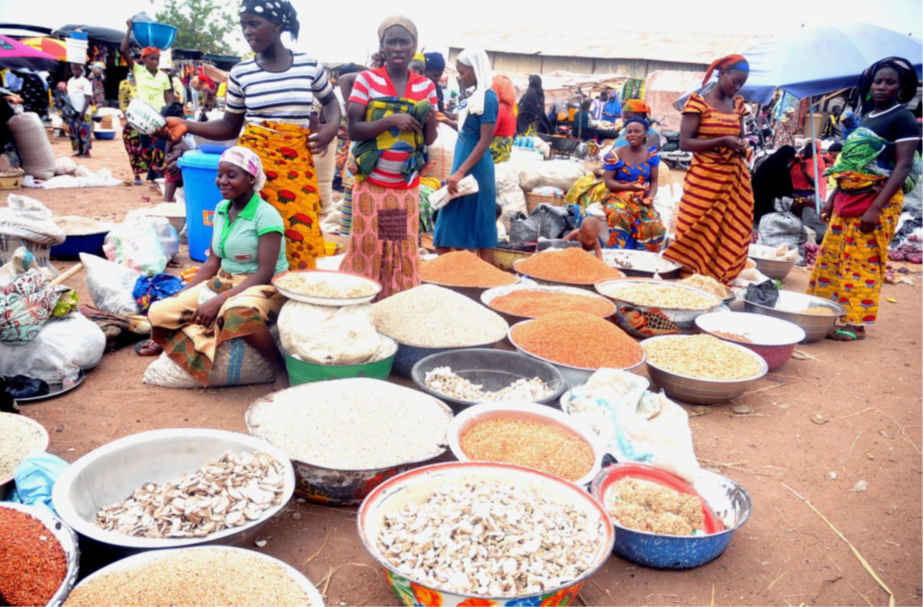
Nigeria’s Food System Failure
Dr Anyanwu, Christiantus Izuchukwu
Gender Equity and Nigeria’s Governance Gap

By Dr Izuchukwu Christiantus Anyanwu
Stabilising Traditional Authority in Nigeria’s Subnational Governance

Executive Summary Nigeria’s persistent open defecation (OD) crisis reflects a failure of local service delivery rather than a lack of national policy ambition. Despite comprehensive frameworks such as the Partnership for Expanded Water Supply, Sanitation and Hygiene (PEWASH) 2016–2030, and donor-supported programmes including the Sustainable Urban and Rural Water Supply, Sanitation and Hygiene Programme (SURWASH), an estimated 48 million Nigerians, about 23 per cent of the population, still practice open defecation. The burden falls heaviest on rural communities governed by low-capacity local government areas (LGAs), where progress is fragile and often reversed. This policy brief contends that the failure is not one of design, but of delivery. The third tier of government—tasked with translating policy into practice—operates within a system marked by blurred responsibilities, constrained finances, weak incentives, and monitoring systems that observe but do not compel. Where authority, funding, and accountability align, sanitation outcomes improve; where they do not, policy dissolves into paper. Drawing lessons from countries that have reduced open defecation through disciplined local execution, this brief proposes an LGA-driven sanitation delivery model anchored in three principles: ● Clarity of responsibility, ● Performance-based financing ● Enforceability monitoring. The brief argues for strengthening—not replacing—existing frameworks such as PEWASH by embedding incentives, sanctions, and public accountability at the local level. The path to SDG 6 in Nigeria lies not in drafting new strategies but in ensuring that existing ones are carried out, with rigour and consequence, into the smallest administrative unit, namely, the local government.
From Policy to Practice: Strengthening Local Governments to End Open Defecation in Nigeria

Executive Summary Nigeria’s traditional authority system—long central to local governance—is becoming increasingly unstable due to weak institutional frameworks, inconsistent legal standards, and rising political interference. Across rural and peri-urban communities, traditional rulers play vital roles in dispute resolution, land management, and community mobilisation. Yet the mechanisms governing their recognition, suspension, and removal remain fragmented and unpredictable. Between 2020 and 2025, at least 30 publicly reported chieftaincy disputes across several states revealed systemic governance failures rather than isolated incidents. These disruptions are driven by gaps in local government administration, divergent state laws, prolonged judicial processes, and weakly formalised advisory systems. Executive discretion—particularly during electoral cycles—has further intensified instability, undermining procedural credibility and public trust. The consequences are immediate and material: leadership vacuums delay development projects, weaken local security coordination, and erode institutional legitimacy in already fragile settings. Despite their continued relevance, traditional institutions operate within a constitutional grey zone, lacking clear and enforceable governance standards. This brief argues that stabilisation—not expansion—of traditional authority is required. It proposes four priorities: ● Standardizing due-process safeguards, ● Accelerating judicial resolution, ● Institutionalizing structured consultation, and ● Modernizing administrative systems. Strengthening these mechanisms is essential to restoring predictability, legitimacy, and coherence in Nigeria’s subnational governance.