Expanding access to quality health services, tackling social determinants of health, and driving systemic health reform through research and public advocacy.

Expanding access to quality health services, tackling social determinants of health, and driving systemic health reform through research and public advocacy.
Executive SummaryNigeria’s failure to realise Sustainable Development Goal (SDG) 11, sustainable, resilient, and inclusive cities, is fundamentally a governance and delivery challenge rather than a deficit of policy intent or technical knowledge. Rapid urbanisation, with an urban population of over 123 million growing at 4.1 per cent annually, has intersected with intensifying climate risks to expose infrastructure systems built without enforceable standards, coordinated mandates, or predictable financing. The 2022 floods alone affected 4.4 million people, displaced up to 1.4 million, and caused widespread damage to roads, housing, and economic assets, while coastal cities such as Lagos face accelerating shoreline erosion averaging about 2.6 meters per year.This policy brief argues that binding governance reform is the decisive lever for achieving SDG 11. The core constraint is weak enforcement of resilience standards and fragmented decision authority across federal, state, and local institutions, allowing political and informal considerations to override risk-informed planning.Drawing on comparative lessons from Bangladesh, the Netherlands, the Philippines, and South Africa, this brief proposes a coherent reform package centered on statutory accountability, climate-proofed infrastructure standards, conditional and decentralised finance, coastal and nature-based defenses, and integrated data and early warning systems.If implemented, these reforms would reduce lifecycle infrastructure losses, protect vulnerable urban populations, and directly advance SDG 11 targets, particularly disaster loss reduction (11.5) and integrated resilience planning (11.b), by aligning incentives, finance, and delivery with climate-resilient urban development. From Governance Reform to Resilient CitiesNigeria’s urban infrastructure vulnerability does not stem from a lack of policy intent, but from the failure to …

In a democracy, citizenship is not negotiable. It is not subject to political clearance or gubernatorial discretion. Yet, recent events in Nigeria suggest that some state actors have either forgotten this truth—or have chosen to disregard it. In July 2025, Governor Monday Okpebholo, the All Progressives Congress (APC) Governor of Edo State, issued a public threat against former Anambra State Governor and Labour Party leader Peter Obi. ‘There’s a new sheriff in town,’ he declared, warning that Obi ‘cannot just come into Edo without informing me’ and that ‘his security will not be guaranteed.’ The implications of such a statement are grave. This follows a similarly troubling episode in April, when Governor Hyacinth Alia of Benue State, also a member of the APC, warned Obi against visiting internally displaced persons (IDP) camps in the state without prior approval. The reason given: the government could not guarantee his safety. Both incidents reflect a dangerous escalation in Nigeria’s political climate, a creeping normalisation of territorial authoritarianism by subnational leaders. These are not mere instances of campaign rhetoric but disturbing signals of institutional erosion, reminiscent of Nigeria’s troubled political past. Lessons from History In the lead-up to Nigeria’s 1964 federal elections, Dr. Michael Okpara, then Premier of the Eastern Region, was denied entry into Kano by Northern authorities while campaigning for the opposition United Progressive Grand Alliance (UPGA). Richard Sklar’s Nigerian Political Parties (1963) and post-independence follow-up essays highlight the severe restrictions placed on UPGA leaders seeking to campaign outside their regional bases. …


In a democracy, citizenship is not negotiable. It is not subject to political clearance or gubernatorial discretion. Yet, recent events in Nigeria suggest that some state actors have either forgotten this truth—or have chosen to disregard it. In July 2025, Governor Monday Okpebholo, the All Progressives Congress (APC) Governor of Edo State, issued a public threat against former Anambra State Governor and Labour Party leader Peter Obi. ‘There’s a new sheriff in town,’ he declared, warning that Obi ‘cannot just come into Edo without informing me’ and that ‘his security will not be guaranteed.’ The implications of such a statement are grave. This follows a similarly troubling episode in April, when Governor Hyacinth Alia of Benue State, also a member of the APC, warned Obi against visiting internally displaced persons (IDP) camps in the state without prior approval. The reason given: the government could not guarantee his safety. Both incidents reflect a dangerous escalation in Nigeria’s political climate, a creeping normalisation of territorial authoritarianism by subnational leaders. These are not mere instances of campaign rhetoric but disturbing signals of institutional erosion, reminiscent of Nigeria’s troubled political past. Lessons from History In the lead-up to Nigeria’s 1964 federal elections, Dr. Michael Okpara, then Premier of the Eastern Region, was denied entry into Kano by Northern authorities while campaigning for the opposition United Progressive Grand Alliance (UPGA). Richard Sklar’s Nigerian Political Parties (1963) and post-independence follow-up essays highlight the severe restrictions placed on UPGA leaders seeking to campaign outside their regional bases. …

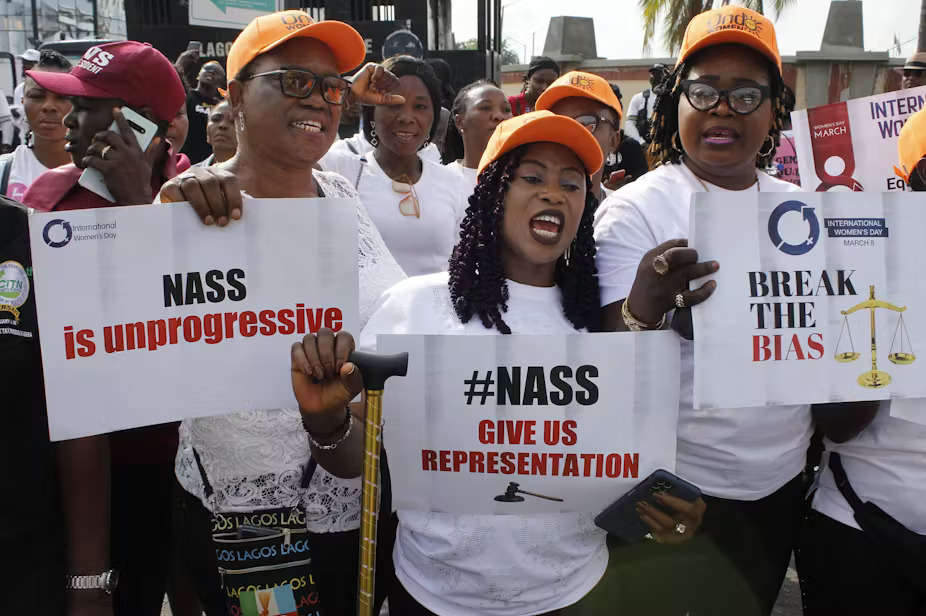
Introduction Despite years of policy dialogue and global frameworks, Nigerian women still face formidable hurdles in political inclusion, economic opportunity, and access to education. These gaps are not merely gender issues; they represent fundamental development failures. With women holding only 3.9% of seats in the House of Representatives and 3.1% in the Senate in 2023, coupled with 917 maternal deaths per 100,000 live births, and a female literacy rate of 59% compared to 74% for males, the figures speak volumes: Nigeria is not doing enough. This article explores the historical, legal, economic, and cultural challenges that continue to limit Nigerian women. It then presents actionable reforms, drawing on global best practices and local realities, to genuinely advance gender equality. Ultimately, women’s empowerment is not just a moral imperative; it is a clear path to good governance, sustainable development, and long-term social stability. Historical and Legal Context Historically, Nigerian women such as Queen Amina of Zazzau and the Aba women protesters of 1929 exercised significant power in governance and trade. However, British colonial structures erased their agency by excluding women from formal political and economic systems. This pattern persisted post-independence. Nigeria’s 1979 Constitution failed to enshrine gender-specific protections or affirmative action measures. It was not until the 2006 National Gender Policy that a 35% affirmative action quota was formally proposed. Despite this, it remains largely unenforced due to lack of political will and insufficient legal backing. Although Nigeria has ratified key international frameworks such as CEDAW and the Maputo Protocol, these …